
When book reviews get ugly
On taste, subjectivity, and the ad hominem fallacy. That subtitle makes this sound Scholarly but it's really just a rant.

In case you haven’t noticed, Caro Claire Burke’s Yesteryear is very, very popular right now.
Maybe popular isn’t the right word. “Buzzy,” perhaps. “Controversial.” “Feeding the discourse.” Readers—including me—have a lot of opinions. Many of us feel the novel was overhyped and didn’t deliver on its marketing, its premise, or the research its author is purported to be famous for. Others feel it’s a fun, fascinating beach read that provokes thought without needing to dive too deep.
And then there are the people who seem personally attacked by any unfavorable review of the book, and that’s what I want to dive into today.
I’m not interested in dogpiling on anyone, and in the interest of not making anyone feel any more personally attacked, I’m redacting names from the statements I’m sharing. If you’re following the drama on Substack or Instagram or even the New York Times interview where Burke pushed back on claims that she did not thoroughly research the religion she claimed to write about, you’ll be able to find the original arguments fairly quickly. But I’m not trying to doxx anyone here—this is about ideas, not the people who shared them.
I, like Leigh Stein and Holly MathNerd and Lore Wilbert and Helen Roy and the team at The Argument, felt Yesteryear was lazily written and did not qualify as satire so much as a vengeful fantasy. But when these opinions were voiced, many people felt we were the lazy ones: that we had read the book on a surface level only, and missed the layers of meaning with which Burke had imbued the main character and the plot. “Natalie is an unreliable narrator,” some argued. “You aren’t SUPPOSED to like her, this is a commentary on contemporary issues,” others said. (Still others, like my friend Gina Dalfonzo, wrote a thoughtful and favorable review which I do not agree with, per se, but I still respected and enjoyed.)
“Actually you missed the WHOLE POINT of the book and have no critical thinking skills,” one Threads user insisted, and then blocked me.
When I wrote my initial post about Yesteryear, I tried really hard to not make my attacks personal. I tried to be objective about what I didn’t like, without insulting the writer’s intelligence or the 5-star readers’ taste. People are allowed to like different things, and critically-thinking, attentive readers are allowed to retain their status as such even if they reach diametrically opposed conclusions. I am no advocate for the death of the author, but I do believe two equally valid and differing opinions can exist regarding the same work, because each reader brings their unique experience and worldview to each book.
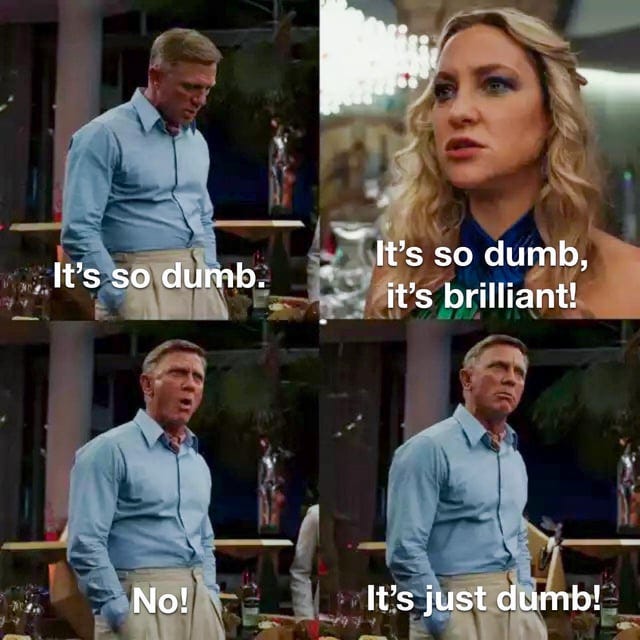
But that doesn’t mean I don’t feel like Benoit Blanc every so often.
Some readers who liked it really did not like the idea of some of us not liking it. “It’s a big fun commercial novel,” one author wrote on Substack Notes. “I think instead of picking it apart, a lot of people need to be investigating internally, emotionally, why they’re so upset by its success!”
That drew me up short. The implication, of course, is that the critics of the book are just jealous. Am I jealous? Am I looking at Burke’s novel and, without any authority to do so, thinking “I could have written a better one” (another claim a fan of the novel made against those who criticizes it)? Am I just being a mean girl?
I don’t think I am. There have been lots of books that have been successful and probably didn’t deserve their success, but I would never think of myself as jealous of Stephenie Meyer’s multi-million-dollar New Jersey mansion, just bewildered that so many people absolutely ate up her sparkly vampire twaddle and made four blue movies about it. (And also the fact that she chose to buy a 12,000sqf house in NEW JERSEY.) But at any rate, whether I and a plethora of other readers are jealous of Caro Claire Burke (hereafter CCB) is a moot point. It shouldn’t matter. The fact is that if we were discussing a book written by a man, “jealousy” would not enter the conversation. I have a lot of concerns regarding Harrison Scott Key’s How to Stay Married, and will likely write on them at some point, but if I say “I think Key’s confessional oversharing method hooks readers who are expecting some real soul-searching and self-awareness and then leaves them with a bad taste in their mouths” no one is going to say “oh, so you’re just mad that he won the Thurber Award.”
(Note: I had to search long and hard through my list of books read in the last couple of years to find one written by a living man that I could reference for this analogy, lol. Men are writing bad books every day of the week, but I am not, in general, reading them. Go forth and be blessed, crappy boy writers. You are not my concern.)
If we immediately jump to the assumption that critique of a woman must equal jealousy of her success, we are falling prey to the You Don’t Support All Women fallacy. Oh, you don’t know the YDSAW fallacy? Perhaps you are blessed by not being as relentlessly online as I am. The YDSAW fallacy says that if you criticize any woman for any choice she has made—whether she is an actor, a writer, a politician, a journalist who had a torrid affair with RFK Jr.—then you are secretly a misogynist who doesn’t want to see women succeed. This is so dumb. Not brilliant! Just dumb.
But here’s the thing—women are people, and people do dumb stuff. They write dumb books, they have dumb opinions, and they date dumb footballers. Neither you nor I are an exception. To exempt women from being dumb, and from being called out on their dumbitude (can we make that a word?) is to say they aren’t human in the way that the rest of humanity is human. That is not equality, it’s condescension. (I hate the way AI has co-opted the “it’s not X, it’s y” rhetoric but there’s not much I can do about it. I hope you know by now I would never use AI to write these posts.)
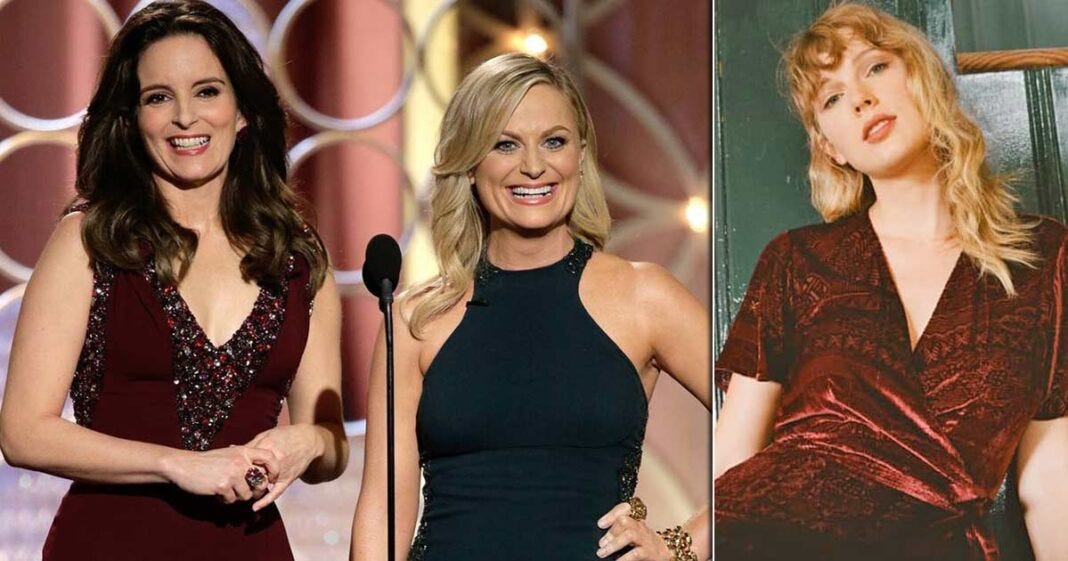
I put Tina Fey, Amy Poehler, and Taylor Swift in the header image for this post because Taylor Swift once famously said of Fey and Poehler (who made an ill-advised jibe about her love life at the Golden Globes a decade or so ago), “there’s a special place in hell for women who don’t help other women.” Swift didn’t come up with this line—it’s attributed here to Katie Couric but the originator seems to actually be Madeleine Albright. That’s not really relevant, I just wanted to make sure you know I’m a fact-checker.
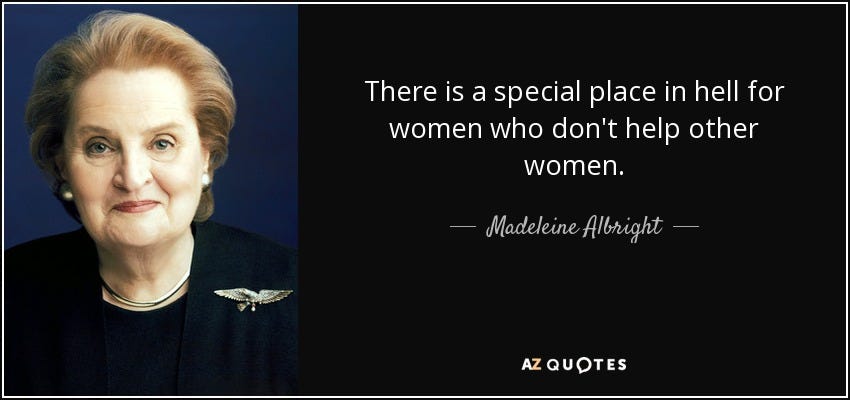
The “special place in hell” line has been done to death. There’s room for critique of Fey and Poehler’s joke about Swift’s long list of ex-lovers, but they aren’t impeding her progress to the billionaire club by saying she’s a serial dater. If you can ask the question “would they make this kind of dig at a man?” and the answer is a resounding YES, then perhaps comedians are just doing what comedians do and gender isn’t really applicable here.
But let’s get back to CCB and the assertion that people who “pick apart” her novel are doing it out of a disgruntled envy and are not self-aware. Come now. People who enjoy thinking about and, yes, picking apart novels and films (hello!) are not doing it because they don’t want to consider their own feelings about a work of art and what it revealed about themselves. It’s the opposite, in fact. A large part of good media analysis does in fact involve interrogating one’s own personal biases and examining the reactions that the art evokes. No critique can be fully objective, certainly, but it is not arguing in good faith to assume that someone who disliked a work is simply being a mean girl rather than engaging critically.
But as to the hurt and jealousy of it all? Ah, there’s the rub, as Hamlet and Father Tim would say. No matter how objective we say we want to be, book reviews are personal. They cannot not be.
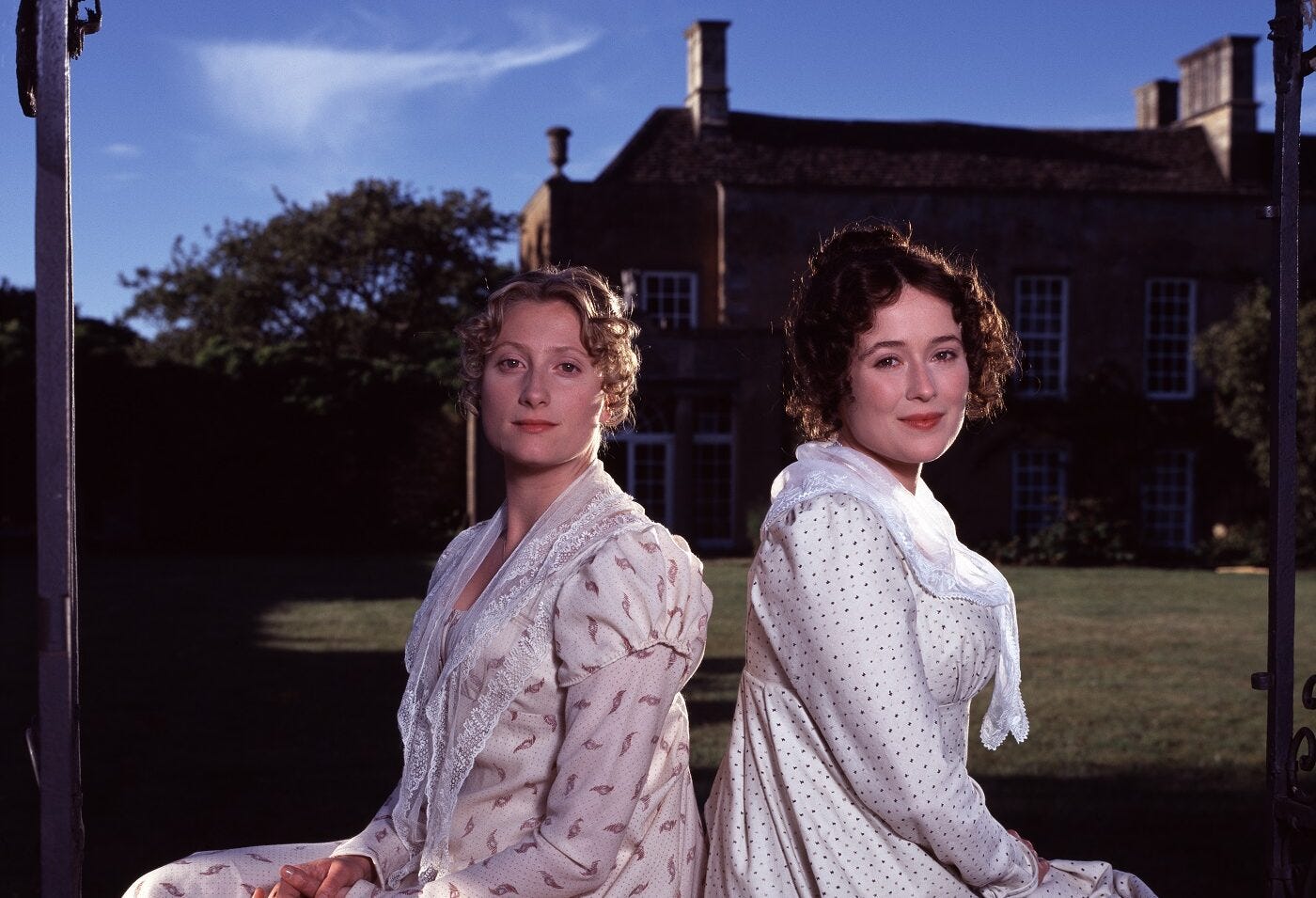
Before I began writing on Medium and Substack, I was a blogger who made exactly zero dollars writing at great length and with many hardline opinions about classic literature and period dramas. One of the opinions I maintained with great rigor (and still do, in all honesty) was that the 1995 Pride and Prejudice miniseries is much better in every way than the 2005 film starring Keira Knightley. The reasons for this are too many for a short post that is not actually about Pride and Prejudice, but the gist of it is that I feel the 1995 version is more book-accurate and the 2005 version has too many pigs.

I have several dear friends who really, really like the 2005 version. And—I am sorry to pain you, but so it is—I was kind of a jerk about this when I was a younger writer gleefully extolling the virtues of P&P95. Because P&P95 was objectively better, and because I liked it more, it must follow that I was a smarter and more informed reader (and movie-viewer) and that everyone who liked P&P2005 was a less-intellectual consumer of media, or perhaps just plain dumb.
(I’ve used that word a lot in this piece. Did you know it was spelled with a B? Because I did. Many such cases.)
If friendship is born at the moment when one man (OR WOMAN) says to another, “What! You too? I thought that no one but myself…”, as C.S. Lewis is somewhat inaccurately quoted, then enmity may be born at the moment when one woman says to another, “What! You liked that? What kind of idiot could POSSIBLY…”
Listen, I have thought the latter. Perhaps I have in my ill-advised youth even said the latter. But that doesn’t make it true, or helpful, or a worthy analysis of what makes a book good or bad.
It has taken time, and hurt feelings, and growth in both years and maturity to realize that a) I can critique something without critiquing the people who like it, because my experience is not the be-all, end-all and b) I can absorb and acknowledge someone else’s dislike of something I like without taking personal offense.
For some of you, who have already achieved library nirvana, this is probably an assertion so basic as to rival that of “how to spell the word dumb.” But for others of us, who clung desperately for much of our adolescence to the idea that our worldview was The Only Right Way, it has been more of a slow realization. And for some of the people zealously arguing the finer points of Yesteryear on Substack… well, to quote Joy Clarkson, what a treat they have ahead of them, to discover that people can dislike a “feminist” book without wanting to repeal the 19th Amendment or turn into the green-eyed monster from the Berenstain Bears!

I’m going to continue to pick on Gina Dalfonzo here because I know she is kind and smart and gracious and will take it on the chin—Gina and I do not see eye-to-eye about Yesteryear. That is okay. Gina saw glass where I saw grime. That is to her credit. Gina is a thoughtful and talented writer who is not reading at a surface level or checking books off a list so she can make a viral TikTok. I know her, and I know her heart for good books. Maybe, after all, she is right and I am wrong! I do not think so, but I respect the fact that she does, because I respect her.
Maybe that was what the “big fun commercial novel” really had to offer, after all—giving us an opportunity to nitpick among good company. You know, what Anne Elliot considers good company: clever, well-informed people with a great deal of conversation. (And Yesteryear has sparked nothing if not a great deal of conversation.)
But perhaps I am wrong about that too. Perhaps that is not in fact good company, but the best.
Pride and Prejudice 2005 still kinda sucks though. Sorry.
Enjoyed this post and want to say so with a small testimonial? You can tip the author here.
You might also enjoy…
Mr. Bennet is a Terrible Dad

Happy Father’s Day a week late! Let’s talk about how Mr. Bennet of Pride and Prejudice is not a role model for parental figures. Or any figures, even those shown to best advantage during a turn about the room at Netherfield.
Also, can we talk about how pathetic it is when an author likes comments cheering on this mean girl vibe? CCB, your likes are public! Get out of reviewers' spaces.
I am here for the Yesteryear discourse, and for the discourse about the Yesteryear discourse. If we all had the same readings/opinions about books, life would be boring. But I could do without the hate comments on mildly negative Goodreads reviews of middle-grade novels. 🤷🏻♀️